What Sets Traditional Martial Arts Apart: The Value of Lineage
In today’s world, martial arts are often repackaged as fitness routines or competitive sports. But the training offered by Master Yun (Yun Chao Zhang) in Santa Barbara stands apart — not just because of its traditional roots, but because of its power to strengthen the body, improve coordination, and support lifelong health.
What makes this approach unique is its emphasis on whole-body connection. As Master Yun often says, “Take one hair, move the whole body.” Every movement is designed to engage the entire system — muscles, joints, structure — in harmony. This leads to a kind of functional strength and balance that’s not only useful in martial arts but has lasting benefits for mobility, posture, and well-being.
Through disciplined, hands-on instruction, students build strength that is deep, stable, and sustainable — the kind of strength that improves how you feel, how you move, and how you age.
A Lifetime of Experience
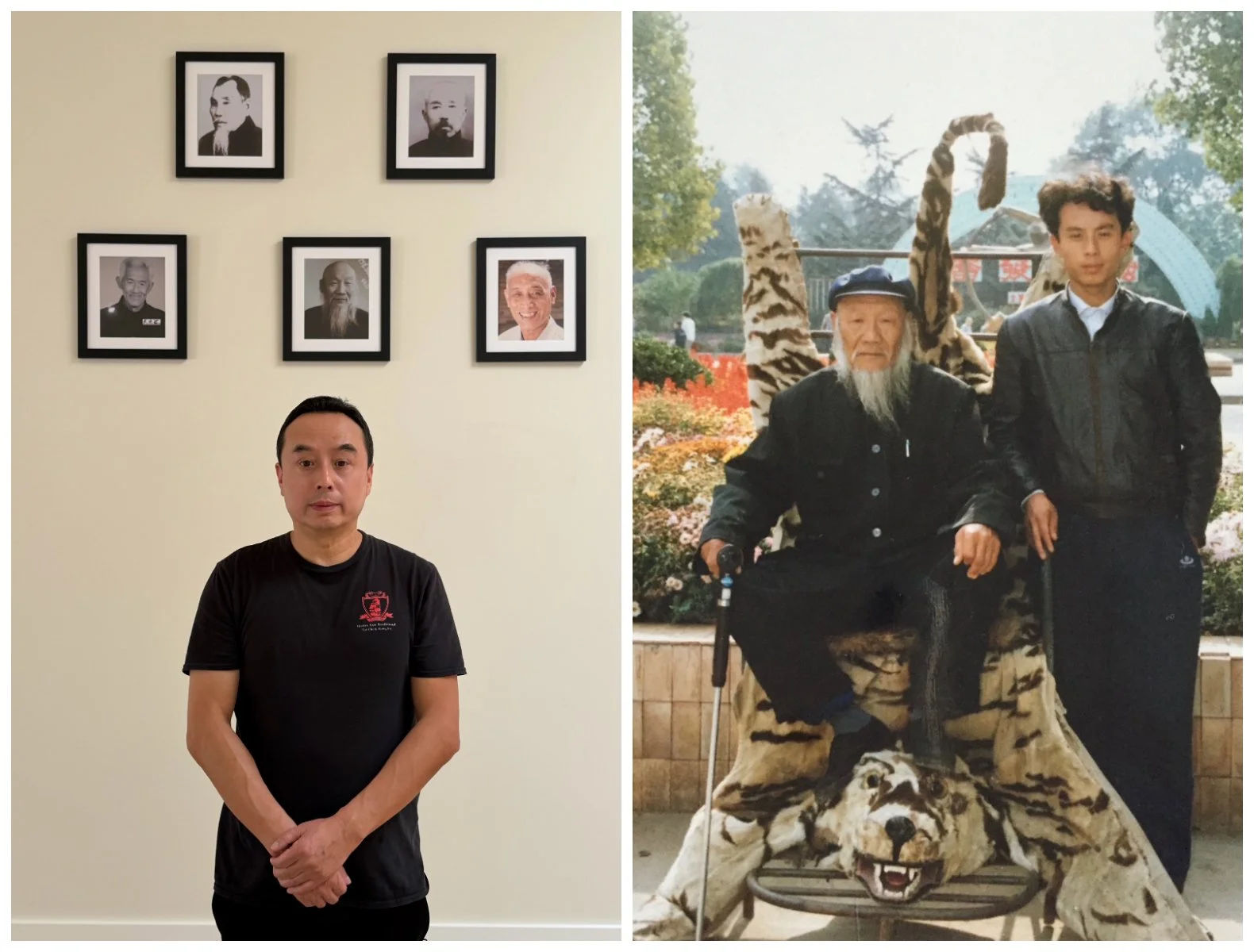
Master Yun began training at age six in Seven Star Praying Mantis Kung Fu, eventually advancing to internal styles like Wu Style Tai Chi and Shang Style Xing Yi. With more than 50 years of continuous practice and numerous awards in Mantis Boxing and Swordsmanship, his knowledge reflects a lifetime of commitment to preserving and sharing traditional martial arts.
His students benefit from decades of refinement, learning how to develop power and precision without sacrificing joint health or mobility. Training is grounded in results — not performance — with an emphasis on building strength that lasts.
What Are Traditional Martial Arts?
Traditional Chinese martial arts are defined by their lineage which refers to the direct transmission of knowledge from teacher to student across generations. These systems endure because they work — plain and simple. If a technique or form didn’t produce results, it would have disappeared long ago.
That’s why traditional forms have remained largely unchanged: they’re built on effectiveness, not trend. They’ve been tested over time, in real-world contexts, and refined for both performance and longevity.
Traditional training isn’t about memorizing choreography. It’s about learning how to move in a way that’s mechanically sound, efficient, and powerful. And because the movements are rooted in deep structural principles, the training improves posture, coordination, and overall body function — benefits that carry into every aspect of daily life.
Traditional vs. Modern: Understanding the Differences
Traditional and modern martial arts both offer value, but their approaches differ.
Traditional styles focus on long-term development through disciplined, step-by-step instruction. Movements are taught with precision and purpose — emphasizing structure, control, and total-body coordination. The goal isn’t to fight or compete — it’s to build a healthier, stronger body over time.
Modern martial arts are often adapted for quick learning, sport, or general fitness. These programs tend to emphasize speed, intensity, and short-term progress. While they can be great for introducing new students to martial arts, they may not offer the same level of depth or long-term physical benefits.
All styles have their place. Our focus is on traditional methods — because they’ve stood the test of time and consistently produce results.
Why Lineage Matters
Training within a recognized lineage means learning from a system that has been proven effective across generations.
Each movement exists for a reason. There’s nothing extra — no filler. Under this kind of instruction, students don’t just become more skilled — they become physically transformed. They develop strength that is rooted in alignment, not tension. They learn to move with control, not strain. And they gain a deep understanding of how to use the body as a unified system.
This training strengthens muscles and joints, improves coordination and balance, and supports long-term joint health and mobility. That’s why lineage matters — it’s not just about tradition. It’s about results you can feel.
A Return to Authentic Training
In a world full of shortcuts and fast certifications, traditional martial arts offer something more meaningful: a path to real strength and lasting health.
This isn’t training for show. It’s training that works — and has for generations. Our students don’t just learn techniques; they build bodies that are resilient, responsive, and well-aligned.
That’s the power of tradition — and why it continues to thrive.
Ready to Experience the Difference?
Join us for a class and discover how traditional martial arts can reshape your body, your training, and your health. View our current class schedule and sign up.